

Primo Bottom Load Water Dispenser Manual: A Comprehensive Guide
Greetings and welcome! This manual provides detailed instructions for your Primo dispenser‚ ensuring optimal performance and longevity. It’s designed for easy understanding and safe operation‚ covering everything from initial setup to advanced features.
Primo bottom load water dispensers represent a convenient and hygienic solution for accessing purified water in your home or office. Unlike traditional top-load models‚ these dispensers eliminate the need for heavy lifting‚ making water access effortless for everyone. They are designed to accommodate standard 5-gallon water bottles‚ loaded from the bottom for increased stability and ease of use.
These dispensers prioritize convenience‚ offering hot‚ cold‚ and room temperature water options at the touch of a button. Many models incorporate safety features like child safety locks and automatic shut-off mechanisms. Primo dispensers are built with quality materials‚ ensuring durability and reliable performance. Understanding your specific model and following the instructions within this manual will maximize your experience and ensure years of refreshing hydration. Proper maintenance‚ as outlined herein‚ is key to optimal function.
Understanding Your Primo Dispenser Model
Your Primo bottom load dispenser is engineered for user-friendly operation‚ but familiarizing yourself with its specific components is crucial. Locate the water bottle compartment at the base‚ noting the probe that pierces the bottle seal. Identify the hot‚ cold‚ and room temperature dispensing buttons‚ alongside any safety lock features.
Examine the drip tray and understand its removal for cleaning. Some models feature adjustable temperature controls or a Primo Vision time-lapse system (if applicable). Refer to the diagrams within this manual to pinpoint the location of the power switch‚ water hardness settings‚ and any indicator lights. Knowing these elements will streamline setup‚ operation‚ and maintenance‚ ensuring you fully benefit from your Primo dispenser’s capabilities. Always consult the model-specific details provided.
Safety Precautions and Warnings
Prioritize safety! Always unplug the dispenser before cleaning or performing maintenance. Prolonged contact with treated water or internal components may cause skin irritation; wear protective gloves during servicing. Ensure the power cord remains undamaged and avoid using extension cords.
Never immerse the dispenser in water. Keep children supervised around the unit‚ utilizing the child safety lock feature when available. Do not operate the dispenser if it exhibits any signs of damage. Improper installation‚ such as a loosely connected water inlet hose‚ can lead to leaks – verify secure connections. Avoid dispensing extremely hot water near flammable materials. Adhere to all warnings and instructions to prevent injury or damage. Regular inspection is key to safe operation.

Installation and Setup
Begin with unpacking and inspection! Carefully follow the steps to connect to a water source‚ load the bottle‚ and power on for initial flushing.
Unpacking and Initial Inspection
Carefully unpack your Primo bottom load water dispenser‚ ensuring all packaging materials are removed; Inspect the unit thoroughly for any visible damage that may have occurred during shipping. If damage is present‚ do not install the dispenser and immediately contact Primo Customer Support.
Verify that all components are included: the dispenser unit itself‚ the bottom load probe assembly‚ the power cord‚ and this user manual. Retain the original packaging for potential future transport or warranty claims. Before proceeding‚ ensure the dispenser is placed on a stable‚ level surface capable of supporting its weight when fully loaded with a water bottle. A proper setup prevents potential tipping hazards and ensures optimal operation. Check the water inlet hose is present and undamaged.
Connecting to a Water Source
Primo bottom load dispensers do not require a direct connection to a household water line; they utilize standard 5-gallon water bottles. However‚ ensuring proper bottle probe connection is crucial. Carefully insert the probe assembly into the designated opening on the dispenser base‚ ensuring a secure and airtight fit.
Verify the probe is correctly aligned with the bottle opening to prevent leaks. The water inlet hose‚ if applicable to your model for initial softener tank filling‚ must be screwed on properly. Do not overtighten‚ as this could damage the connections. Confirm there are no kinks or obstructions in the hose. Proper connection guarantees efficient water delivery and prevents potential issues during operation.
Loading the Water Bottle
Begin by removing the bottom load dispenser’s access panel‚ typically located at the base of the unit. Gently slide the empty 5-gallon water bottle into the receiving compartment‚ ensuring it sits securely on the designated support. Align the bottle’s opening with the probe assembly‚ previously connected during setup.
Carefully push the bottle upwards until the probe pierces the bottle’s cap‚ establishing a watertight seal. A slight ‘click’ sound often indicates a successful connection. Avoid forcing the bottle‚ as this could damage the probe or the bottle itself. Once secured‚ verify there are no visible leaks around the probe and bottle connection. Replace the access panel‚ ensuring it’s firmly closed.
Powering On and Initial Flush
After loading the water bottle and verifying connections‚ plug the Primo dispenser into a grounded electrical outlet. The unit will likely power on automatically‚ indicated by illuminated control panel lights. However‚ before dispensing for consumption‚ an initial flush is crucial.
Dispense water from both the hot and cold taps for several minutes – approximately 5-10 minutes total. This process removes any residual manufacturing particles or air from the internal lines‚ ensuring the water is clean and fresh. Discard this initially dispensed water; do not drink it. Continue flushing until the water runs clear and consistently. This initial flush safeguards water quality and optimizes dispenser performance.

Operating Your Primo Dispenser
Enjoy convenient hydration! This section details how to effortlessly dispense hot‚ cold‚ and room temperature water‚ utilizing the dispenser’s intuitive controls and features.
Dispensing Hot Water
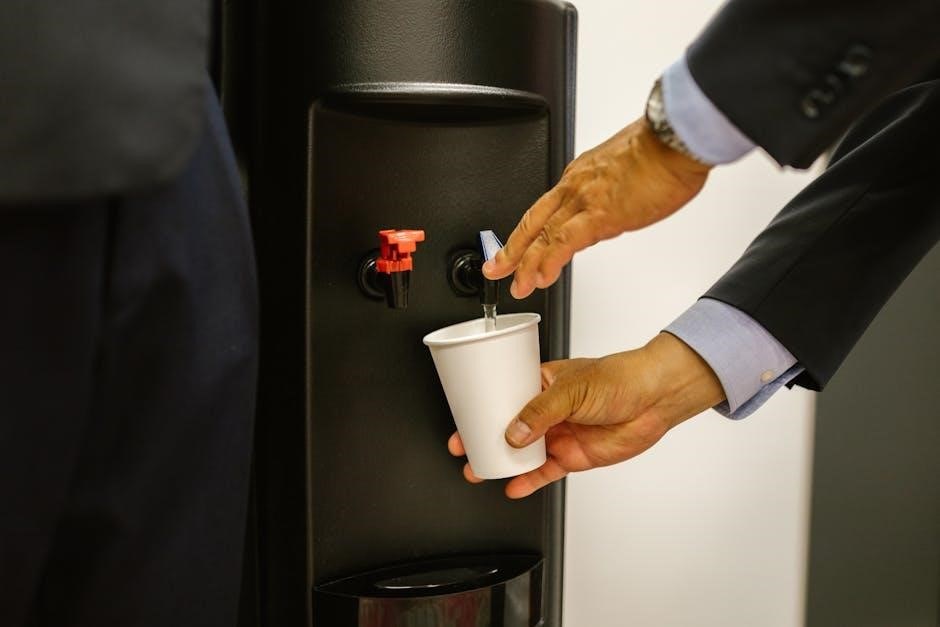
Caution: Hot water can cause burns. To dispense hot water‚ ensure the hot water switch is activated – typically indicated by a lit indicator. Place a heat-resistant container beneath the hot water spout. Gently press and hold the hot water lever or button.
The dispenser will begin to deliver hot water. Continue holding the lever/button for the desired amount. Release to stop the flow. Always exercise extreme caution when dispensing hot water‚ especially around children. Be mindful of the container’s capacity to prevent overflow.
Some models feature adjustable temperature settings; consult the ‘Advanced Features’ section for details on customization. Regularly inspect the hot water spout for any signs of mineral buildup or damage. Never attempt to modify or disable the safety features related to hot water dispensing.
Dispensing Cold Water
Enjoy refreshing‚ chilled water with ease! To dispense cold water‚ verify the cold water switch is engaged – usually signified by a corresponding illuminated indicator. Position a clean glass or container under the cold water spout. Gently press and maintain pressure on the cold water lever or button.
The dispenser will immediately begin delivering cold‚ filtered water. Continue holding the lever/button until you’ve dispensed the desired quantity. Release to cease the flow. For optimal cooling‚ allow the dispenser several hours to chill the water after a bottle change.
Certain models offer adjustable cooling levels; refer to the ‘Advanced Features’ section for temperature control instructions. Regularly check the cold water spout for cleanliness and potential obstructions. Avoid dispensing carbonated beverages through the cold water spout.
Dispensing Room Temperature Water
Accessing convenient‚ unchilled hydration is simple! To dispense room temperature water‚ ensure the corresponding switch or button is activated – often indicated by a neutral or unlit symbol. Place a clean drinking glass or suitable container directly beneath the room temperature water spout.
Apply gentle‚ consistent pressure to the designated lever or button for room temperature water. The dispenser will promptly begin delivering water at ambient temperature. Maintain pressure until you’ve filled your container to the desired level‚ then release.
This is ideal for mixing beverages‚ preparing food‚ or simply enjoying water without chilling. Regularly inspect the spout for cleanliness. Avoid using this spout for hot liquids‚ as it isn’t insulated for high temperatures.
Child Safety Lock Feature
Prioritizing safety is paramount! Many Primo bottom load dispensers include a child safety lock‚ particularly for the hot water dispensing function. This feature prevents accidental activation‚ reducing the risk of scalding. To engage the lock‚ typically a dedicated button or switch is pressed and held for a few seconds.
An indicator light will illuminate‚ confirming the lock is active. When locked‚ attempting to dispense hot water will be disabled. To unlock‚ repeat the process – pressing and holding the same button or switch until the indicator light turns off.
Always familiarize yourself with the specific locking mechanism of your model; Regularly test the lock to ensure it functions correctly. This feature offers peace of mind in households with young children or vulnerable individuals.

Maintenance and Cleaning
Regular upkeep is essential! Consistent cleaning ensures optimal performance‚ water quality‚ and extends the lifespan of your Primo dispenser. Follow these guidelines carefully.
Cleaning the Dispenser Exterior
Maintaining a clean exterior not only enhances the appearance of your Primo dispenser but also contributes to overall hygiene. To clean the exterior surfaces‚ simply use a soft‚ damp cloth and a mild dish soap solution. Avoid abrasive cleaners‚ scouring pads‚ or harsh chemicals‚ as these can damage the finish.
Gently wipe down the sides‚ top‚ and front of the dispenser‚ paying attention to any spills or splatters. Rinse the cloth thoroughly with clean water and wipe the surfaces again to remove any soap residue. For stubborn stains‚ allow the soap solution to sit for a few minutes before wiping.
Important: Always unplug the dispenser from the power outlet before cleaning to prevent electrical shock. Ensure the cloth is only damp‚ not soaking wet‚ to avoid water entering the internal components. Dry the exterior with a clean‚ dry cloth after cleaning.
Cleaning the Drip Tray
Regularly cleaning the drip tray is crucial to prevent bacterial growth and maintain a sanitary dispensing environment. The drip tray catches any accidental spills during water dispensing‚ so frequent cleaning is essential. To begin‚ carefully remove the drip tray from the dispenser – consult your model’s specific instructions if needed.

Empty any accumulated water from the drip tray. Wash the tray with warm‚ soapy water using a soft sponge or cloth. Avoid abrasive cleaners that could scratch the surface. Rinse thoroughly with clean water to remove all soap residue.
Ensure complete drying before reinserting the drip tray into the dispenser. A damp tray can promote bacterial growth. Inspect the drip tray for any cracks or damage during cleaning; replace if necessary. Cleaning should be performed at least weekly‚ or more often with heavy use.
Cleaning the Bottle Probe
Maintaining a clean bottle probe is vital for ensuring water purity and preventing contamination. The probe pierces the water bottle‚ so regular sanitation is paramount. Begin by disconnecting the dispenser from its power source for safety. Locate the bottle probe – it’s the component that enters the water bottle.
Gently remove the probe‚ following your dispenser model’s instructions. Clean the probe with warm water and a mild dish soap. Use a soft brush or cloth to remove any mineral deposits or residue. Avoid abrasive cleaners‚ as they can damage the probe’s surface.
Rinse the probe thoroughly with clean‚ potable water‚ ensuring all soap residue is removed. Allow the probe to air dry completely before reinserting it into the dispenser. Inspect for any damage before reuse; replace if necessary. Regular cleaning‚ ideally monthly‚ safeguards water quality.
Descaling the Water Reservoir
Regular descaling is crucial to maintain your Primo dispenser’s efficiency and water quality. Mineral buildup‚ particularly in areas with hard water‚ can reduce heating performance and affect taste. Use a commercially available descaling solution specifically designed for water dispensers – follow the product’s instructions carefully.
First‚ empty the reservoir completely. Prepare the descaling solution according to the manufacturer’s directions. Pour the solution into the reservoir and allow it to sit for the recommended time‚ typically 30-60 minutes‚ to dissolve mineral deposits.
After soaking‚ flush the reservoir thoroughly with clean water‚ dispensing several bottles’ worth to remove all traces of the descaling solution. Repeat the flushing process if necessary. Customise water hardness settings after descaling for optimal performance. Descale every 6-12 months‚ depending on water hardness.

Troubleshooting Common Issues
Addressing problems promptly ensures continued optimal performance. Check power connections‚ water sources‚ and potential leaks first‚ referencing this manual for detailed guidance and solutions.
Dispenser Not Turning On
If your Primo dispenser fails to power on‚ begin with the simplest checks. Ensure the power cord is securely plugged into a functioning electrical outlet. Verify the outlet is receiving power by testing it with another device.
Next‚ examine the power switch itself; confirm it’s fully engaged. Some models feature a reset button – locate and press it to potentially resolve minor electrical glitches.
Inspect the internal fuse (if applicable‚ consult your model’s specific diagram). A blown fuse will prevent operation. If the fuse is blown‚ replace it with one of the correct amperage rating.
If these steps don’t restore power‚ there might be an internal electrical issue requiring professional service. Do not attempt to disassemble the unit yourself; contact Primo Customer Support for assistance and potential repair options. Always prioritize safety when dealing with electrical appliances.
Water Leaks
Discovering water leaks from your Primo dispenser requires immediate attention. First‚ carefully inspect the water bottle loading area. Ensure the bottle is correctly seated and the probe is making a secure connection. A loose bottle or improperly aligned probe are common leak sources.
Check the water inlet hose connection at the back of the dispenser. Confirm it’s tightly screwed on‚ as a loose connection will cause leakage. Examine the drip tray for overflow; a blocked drain can lead to spills.
Inspect the dispenser’s internal reservoir for cracks or damage. If you notice any structural issues‚ discontinue use and contact Primo support.
For persistent leaks‚ ensure the water bottle itself isn’t damaged. Do not attempt to repair internal components yourself; contact Primo Customer Support for professional assistance and potential repair options.
Water Not Dispensing
Encountering issues with water dispensing? Begin by verifying the water bottle isn’t empty. A seemingly full bottle might have an internal vacuum preventing flow. Try gently tilting the bottle to release any pressure.
Next‚ inspect the bottle probe for obstructions or mineral buildup. Carefully clean the probe with a soft cloth and water. Ensure the dispenser is powered on and hasn’t entered a sleep mode. A blocked detergent dispenser drawer (though unusual for a water dispenser) could potentially affect flow.
Check if the water hardness setting is appropriately configured for your water source. Incorrect settings can sometimes hinder proper operation. If the problem persists‚ a descaling cycle might be necessary to remove mineral deposits within the reservoir.
If none of these steps resolve the issue‚ contact Primo Customer Support for further assistance and potential troubleshooting.
Unusual Noises
Hearing strange sounds from your Primo dispenser? Several factors could be the cause. A common source is air trapped within the lines‚ especially after a new bottle installation. This usually resolves itself with continued use‚ as the air is purged during dispensing.
Vibrations might occur if the dispenser isn’t placed on a level surface. Ensure it’s stable and adjust the feet if necessary. Internal components‚ like the cooling fan or pump‚ can generate noise during operation – this is generally normal.
However‚ loud or grinding noises warrant investigation. Check for any loose parts or obstructions near the fan or pump. Mineral buildup within the reservoir can also contribute to unusual sounds. A descaling cycle might alleviate this.
If the noise is persistent or concerning‚ discontinue use and contact Primo Customer Support for professional diagnosis and repair.

Advanced Features & Settings
Explore customization! Adjust water temperature and hardness settings for personalized preferences‚ and utilize the Primo Vision time-lapse system if your model includes it.
Adjusting Water Temperature
Personalize your hydration! Your Primo dispenser allows you to fine-tune the hot and cold water temperatures to suit your preferences. Access the temperature control panel‚ typically located on the front or side of the unit. Use the designated buttons – often marked with “Hotter/Colder” or plus/minus symbols – to incrementally adjust the desired temperature levels.
Important considerations: Be cautious when increasing the hot water temperature‚ ensuring it doesn’t exceed a scalding point. Similarly‚ lowering the cold water temperature too much might cause condensation. Allow several hours after adjustment for the system to stabilize and deliver water at the new settings. Refer to your specific model’s display for precise temperature readings and available ranges. Regularly check and readjust as needed‚ especially with seasonal temperature fluctuations.
Setting Water Hardness
Optimize dispenser performance! Customizing the water hardness setting is crucial for preventing scale buildup and ensuring the longevity of your Primo dispenser. Locate the water hardness setting menu‚ usually accessed through the control panel. You’ll likely need to input a value corresponding to your local water hardness level – obtain this information from your water supplier or a water testing kit.
Proper configuration: Incorrect settings can lead to inefficient operation and potential damage. If unsure‚ start with a lower setting and gradually increase it if scale formation becomes noticeable. Regularly review and adjust the setting‚ particularly after changes in your water source. Following the instructions in the manual is vital for accurate calibration and maintaining optimal dispenser functionality. This ensures consistently clean and great-tasting water.
Primo Vision Time-Lapse System (If Applicable)
Advanced embryo monitoring! If your Primo dispenser model incorporates the Primo Vision time-lapse system – developed by Vitrolife – it offers enhanced capabilities for observing the water purification process. This innovative feature captures images at regular intervals‚ creating a visual record of the filtration cycle. This allows for detailed analysis and optimization of water quality.
System functionality: Access the Primo Vision interface through the dispenser’s control panel or a connected device. Review the time-lapse imagery to monitor filter performance and identify any potential issues. The system provides valuable insights into the efficiency of the purification process‚ ensuring consistently clean and safe drinking water. Refer to the separate Primo Vision manual for detailed instructions on operation and data interpretation.

Warranty Information and Support
Protecting your investment! Primo offers a comprehensive warranty on its dispensers; details are included within this manual. Contact customer support for assistance or claims.
Primo Dispenser Warranty Details
Your Primo bottom load water dispenser is covered by a limited warranty‚ protecting against manufacturing defects in materials and workmanship. The standard warranty period is one (1) year from the original purchase date‚ covering parts and labor for repairs or replacement. This warranty extends only to the original purchaser and requires proof of purchase.
The warranty does not cover damage resulting from misuse‚ abuse‚ accidents‚ unauthorized repairs‚ improper installation‚ or failure to follow the instructions outlined in this manual. Normal wear and tear‚ including cosmetic damage‚ is also excluded. Any modifications to the dispenser will void the warranty.
To initiate a warranty claim‚ please contact Primo Customer Support (details provided below) with your proof of purchase and a description of the issue. Primo will‚ at its discretion‚ repair or replace the defective product or component. Shipping costs for warranty claims may apply.
Contacting Primo Customer Support
For assistance with your Primo bottom load water dispenser‚ our dedicated customer support team is readily available to address your questions and concerns. We strive to provide prompt and helpful service to ensure your complete satisfaction.
You can reach Primo Customer Support through several channels: by phone at 1-800-PRIMO-USA (1-800-774-6687) during regular business hours‚ Monday through Friday‚ 9:00 AM to 5:00 PM EST. Alternatively‚ you can visit our comprehensive support website at PrimoWater.com/support‚ where you’ll find FAQs‚ troubleshooting guides‚ and downloadable manuals.
For email inquiries‚ please contact us at customerservice@primowater.com. When contacting support‚ please have your dispenser model number and purchase date readily available to expedite the process. We are committed to resolving your issues efficiently and effectively.