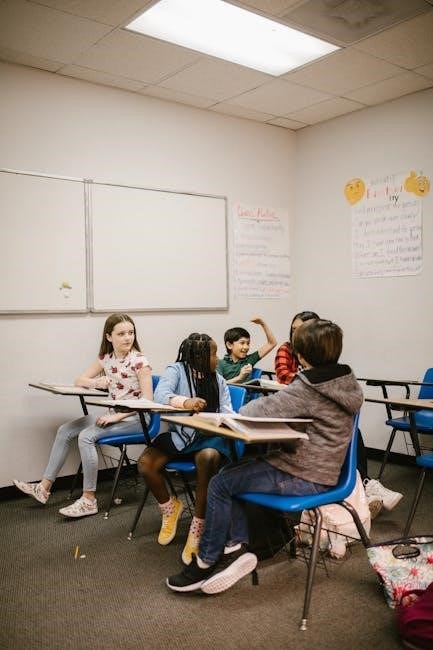

CHAMPS is a proactive, positive approach to classroom behavior management, designed to maximize instructional time and student success.
This system complements existing school-wide programs, focusing on clear expectations for Conversation, Help, Activity, Movement, Participation, and Success.
Teacher preparation often overlooks behavior management, yet CHAMPS provides a practical framework for creating a productive learning environment.

What is CHAMPS?
CHAMPS is a universally applicable, proactive classroom management system developed by Randy Sprick, designed to enhance student behavior and participation. It’s not a rigid program, but rather a framework of expectations that seamlessly integrates with existing school rules, rewards, and consequences – even within established school-wide programs like the “3 Bs: Be Safe, Be Responsible, and Be Respectful.”
The acronym itself – Conversation, Help, Activity, Movement, Participation, and Success – represents the six key areas where clear expectations are crucial. CHAMPS focuses on preventing disruptions by explicitly teaching students what is expected of them in each of these areas, fostering a more focused and respectful learning environment. It’s a strategy built to reduce office referrals and improve overall classroom climate.
The Need for Proactive Classroom Management
Traditional teacher education programs often prioritize instructional techniques, frequently overlooking the critical skill of effective classroom behavior management. This gap can significantly hinder a teacher’s ability to deliver impactful instruction and ultimately impact student success. A reactive approach – addressing disruptions after they occur – consumes valuable teaching time and creates a less conducive learning atmosphere.
CHAMPS addresses this need by providing a proactive system. By establishing clear expectations before activities begin, teachers minimize disruptive behaviors and maximize opportunities for engaged learning. This shift allows educators to focus their energy on instruction rather than constant behavior correction, leading to improved academic achievement and a more positive classroom dynamic.

The Six Components of CHAMPS
CHAMPS centers around six key areas: Conversation, Help, Activity, Movement, Participation, and Success, forming a comprehensive framework for student behavior.
Conversation: Establishing Talking Guidelines
Conversation, a core component of CHAMPS, focuses on explicitly teaching students when they are permitted to talk, with whom, and about what. This isn’t about silencing students, but rather structuring communication for optimal learning.
Teachers define acceptable conversation levels – for example, during independent work, only quiet self-talk is allowed, while group activities permit collaborative discussion. Clear guidelines minimize disruptions and maximize on-task behavior.
Establishing these expectations proactively prevents misbehavior and fosters a respectful learning environment. It’s crucial to model appropriate conversation and provide consistent reminders. CHAMPS emphasizes that controlled conversation isn’t restrictive, but empowering, allowing students to engage appropriately and contribute meaningfully.
Help: Defining How Students Seek Assistance
The Help component of CHAMPS addresses a common classroom challenge: students interrupting instruction to ask questions. It’s about teaching students how to appropriately seek assistance without disrupting the learning flow for themselves and others.
Teachers clearly define acceptable methods for requesting help – such as raising a hand, using a designated signal, or asking a peer. Students learn to independently attempt problem-solving before seeking immediate assistance, fostering self-reliance.
Establishing these procedures minimizes interruptions, allowing the teacher to maintain momentum and provide focused support. CHAMPS emphasizes that offering clear ‘Help’ guidelines isn’t about denying assistance, but empowering students to become responsible learners.
Activity: Clarifying Task Expectations
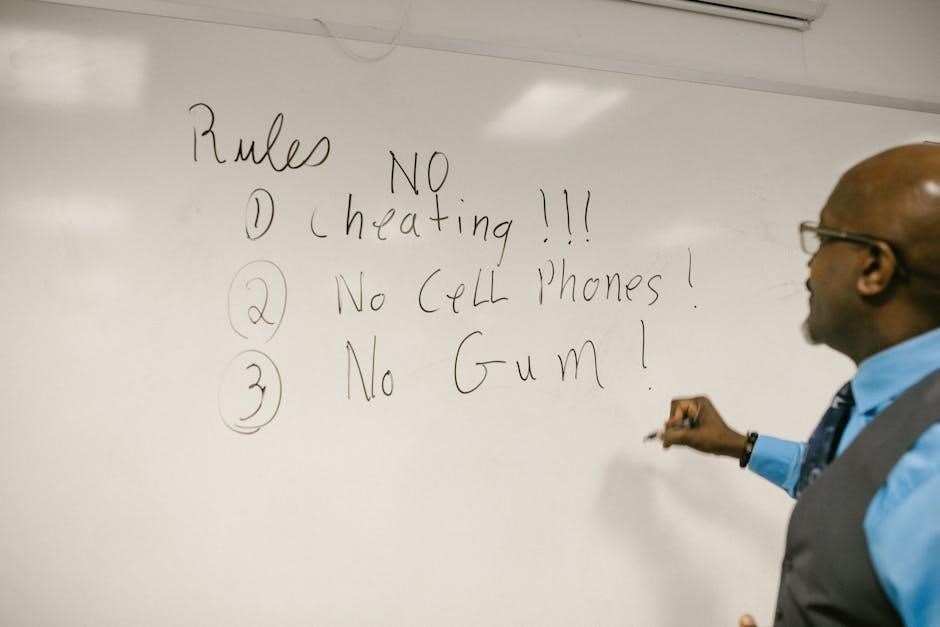
The Activity component of CHAMPS centers on ensuring students fully understand what is expected of them during independent work time. Ambiguity breeds confusion and off-task behavior, so clarity is paramount.
Teachers explicitly communicate the task, desired outcomes, and any specific procedures. This includes detailing what students should do if they finish early or encounter difficulties. Visual cues and checklists can further support understanding.
By proactively addressing potential questions, teachers minimize disruptions and maximize student engagement. CHAMPS emphasizes that a well-defined ‘Activity’ structure promotes independent learning and reduces the need for constant teacher intervention, ultimately boosting academic achievement.
Movement: Managing Student Physical Activity
The Movement component within CHAMPS acknowledges students’ need for physical activity while maintaining a productive learning environment. It’s not about eliminating movement, but rather about controlling when and how students move within the classroom.
Teachers establish clear expectations regarding permissible movement – for example, getting materials, sharpening pencils, or seeking help. These guidelines should specify whether students can move freely or require permission.
Proactive planning minimizes disruptions caused by unnecessary movement. CHAMPS encourages teachers to anticipate movement needs and establish routines accordingly, fostering a classroom where students can move purposefully and respectfully, contributing to increased on-task behavior.
Participation: Ensuring Active Engagement
Participation, a core element of CHAMPS, focuses on maximizing student involvement and active learning within the classroom setting. It’s about defining how students contribute and engage with the lesson, ensuring everyone has opportunities to demonstrate understanding.
Clear expectations are established regarding acceptable forms of participation – raising hands, contributing to group discussions, or completing individual tasks; Teachers explicitly teach these expectations and provide opportunities for practice.
CHAMPS emphasizes creating a safe and supportive environment where students feel comfortable taking risks and sharing their ideas, ultimately leading to improved academic achievement and respectful interactions.
Success: Setting Students Up for Achievement
Success, within the CHAMPS framework, isn’t simply about grades; it’s about proactively designing learning experiences where students are set up to experience positive outcomes. This involves carefully considering task difficulty, providing necessary supports, and clearly communicating expectations for completion.
Teachers utilizing CHAMPS break down assignments into manageable steps, offer scaffolding, and provide frequent check-ins to monitor student progress. This proactive approach minimizes frustration and maximizes the likelihood of students achieving success.
By fostering a culture of achievable goals, CHAMPS contributes to improved student confidence, increased on-task behavior, and a more positive classroom climate overall.
Implementing CHAMPS in Your Classroom
Implementing CHAMPS involves developing clear expectations, consistently teaching and modeling those expectations, and reinforcing positive behaviors to create a structured environment.

Developing CHAMPS Expectations
Developing CHAMPS expectations is a crucial first step, requiring teachers to explicitly define what appropriate behavior looks like for each component.
Consider Conversation – when and how can students talk? For Help, establish a clear signal for needing assistance and how students should seek it.
Activity expectations should clarify what students are doing during independent work, while Movement defines acceptable ways to move around the classroom.
Participation expectations ensure active engagement, and Success focuses on criteria for demonstrating understanding and achieving goals.
These expectations should align with existing school rules, like “Be Safe, Be Responsible, and Be Respectful,” and be stated positively and concisely.
Remember, CHAMPS works with your current systems, not as a replacement, enhancing existing strategies for improved classroom management.
Teaching and Modeling CHAMPS
Teaching and modeling CHAMPS expectations is paramount for success; simply stating them isn’t enough. Teachers must actively demonstrate what compliant behavior looks like.
For example, model how to raise a hand for Help, or demonstrate appropriate Conversation levels during group work. Role-playing scenarios can be incredibly effective.
Explicitly teach the signals for each component – what does it look like to be “on task” during Activity time? What’s the procedure for Movement?
Consistent modeling reinforces expectations and clarifies any ambiguity. Regularly revisit these demonstrations, especially after breaks or transitions.
This proactive approach minimizes disruptions and maximizes instructional time, fostering a positive classroom climate and increased student engagement.
Remember, CHAMPS isn’t just about control; it’s about equipping students with the skills to self-manage and succeed.
Consistency and Reinforcement
Consistency is key when implementing CHAMPS. Expectations must be applied fairly and predictably to all students, every time. Inconsistent enforcement undermines the system’s effectiveness.
Alongside consistency, positive reinforcement is crucial. Acknowledge and reward students who are demonstrating CHAMPS behaviors – appropriate Conversation, seeking Help correctly, or staying On-Task.
Verbal praise, positive notes home, or small classroom rewards can be highly motivating; Focus on reinforcing desired behaviors rather than solely addressing misbehavior.
Regularly review CHAMPS expectations with the class, and provide specific feedback. This reinforces learning and helps students internalize the desired behaviors.
By consistently applying CHAMPS and providing positive reinforcement, teachers can create a more focused and respectful learning environment.
Benefits of Using CHAMPS
CHAMPS demonstrably reduces disruptions and office referrals, fostering a positive classroom climate and boosting student on-task behavior and respectful interactions.
Reduced Classroom Disruptions
CHAMPS proactively minimizes classroom disruptions by establishing clear expectations for student behavior across various activities. By explicitly defining acceptable Conversation levels, procedures for seeking Help, and appropriate Activity engagement, teachers preemptively address potential issues.
Furthermore, CHAMPS guidelines for Movement and Participation curtail off-task behaviors and ensure students remain focused on learning. The system isn’t about suppressing student interaction, but rather channeling it constructively.
The structured approach, detailed in CHAMPS resources, leads to fewer instances of misbehavior, resulting in increased instructional time and a more peaceful learning environment. This reduction in disruptions directly contributes to improved academic outcomes and a more positive classroom atmosphere for everyone.
Improved Classroom Climate
CHAMPS fosters a positive classroom climate by prioritizing respectful interactions and a sense of community. The framework’s emphasis on clearly defined expectations – Conversation, Help, Activity, Movement, Participation, and Success – creates a predictable and supportive learning environment.
When students understand what is expected of them, they feel more secure and are more likely to engage positively with their peers and the teacher. This clarity reduces anxiety and promotes a sense of belonging.
Implementing CHAMPS, as detailed in available resources, cultivates a classroom where students feel valued, respected, and empowered to take ownership of their learning, ultimately leading to a more harmonious and productive atmosphere.
Increased Student On-Task Behavior
CHAMPS directly contributes to increased student on-task behavior through its proactive and structured approach to classroom management. By explicitly teaching and consistently reinforcing expectations across six key areas – Conversation, Help, Activity, Movement, Participation, and Success – teachers minimize disruptions and maximize learning time.
Clear guidelines regarding when and how students can talk, seek assistance, or move around the classroom reduce ambiguity and opportunities for off-task behavior.
Resources detailing CHAMPS implementation demonstrate how this system helps students understand their responsibilities and stay focused on academic tasks, leading to improved engagement and achievement.
Promoting Respectful Interactions
CHAMPS fosters a classroom environment built on mutual respect through clearly defined expectations for student interactions. The system’s emphasis on proactive management minimizes disruptive behaviors that often undermine respectful communication.

By establishing guidelines for Conversation, Participation, and appropriate Movement, CHAMPS encourages students to engage with one another in a civil and considerate manner.
Implementation resources, often found in CHAMPS classroom management PDFs, highlight strategies for modeling and reinforcing respectful language and behavior, ultimately creating a more positive and productive learning community for all students.

CHAMPS and Existing School-Wide Programs
CHAMPS seamlessly integrates with existing school rules and initiatives, like the “3 Bs,” acting as a complementary system to enhance behavior management.
Integrating CHAMPS with School Rules
CHAMPS isn’t designed to replace existing school-wide programs or rules; rather, it functions as a powerful supplement, enhancing their effectiveness. The system’s strength lies in its adaptability – it works with any established set of expectations, rewards, or consequences already in place.
For instance, a school utilizing principles like “Be Safe, Be Responsible, and Be Respectful” can easily layer CHAMPS expectations onto these core tenets. CHAMPS provides the specific, actionable guidelines for Conversation, Help, Activity, Movement, Participation, and Success within the classroom, clarifying how students demonstrate those broader school-wide behaviors.
This integration ensures consistency between school-wide expectations and classroom practices, creating a unified and supportive environment for students. It’s about refining and detailing existing frameworks, not reinventing them.
CHAMPS as a Complementary System
CHAMPS operates effectively as a complementary system, seamlessly integrating with pre-existing classroom management programs. It doesn’t demand a complete overhaul of current strategies, but instead, provides a focused framework to enhance student behavior and engagement.
Even schools with established protocols can benefit from CHAMPS’ detailed approach to expectations. By explicitly defining acceptable levels of Conversation, Help-seeking, Activity engagement, Movement, Participation, and Success criteria, teachers gain a proactive tool for preventing disruptions.
This system doesn’t compete with other methods; it clarifies and strengthens them, leading to reduced office referrals, a more positive classroom climate, and increased on-task behavior for all students.

Resources for CHAMPS Classroom Management (PDF)
CHAMPS materials, including worksheets and templates, are readily available online to support implementation and enhance classroom management strategies effectively.
Finding CHAMPS Materials Online
Locating CHAMPS resources online is straightforward, offering teachers valuable tools to implement this effective classroom management system. Numerous websites provide downloadable PDFs detailing the six core components – Conversation, Help, Activity, Movement, Participation, and Success.
Educators can find comprehensive guides, lesson plans, and practical templates designed to establish clear expectations and promote positive student behavior. Searching for “CHAMPS classroom management PDF” yields a wealth of materials from various educational sources and professional development organizations.
These resources often include sample scripts for teaching CHAMPS expectations, behavior tracking forms, and strategies for reinforcing positive interactions. Utilizing these readily available materials streamlines the implementation process and ensures consistency across the classroom.
Utilizing CHAMPS Worksheets and Templates
CHAMPS worksheets and templates, often available as downloadable PDFs, are instrumental in effectively implementing the system. These tools facilitate the development of clear, concise expectations for each component: Conversation, Help, Activity, Movement, Participation, and Success.
Teachers can use templates to collaboratively create classroom-specific guidelines with students, fostering ownership and understanding. Worksheets aid in documenting observed behaviors and tracking student progress towards meeting established expectations.
Furthermore, readily available forms support consistent reinforcement of positive behaviors and address disruptive incidents proactively. These resources streamline the process of teaching, modeling, and reinforcing CHAMPS, ultimately contributing to a more focused and respectful learning environment.